Jewish philosophy is related to Arabic philosophy. It’s not an unknown fact that the Arabic world is predominated by Muslims. But the Jews were certainly a part of the Middle East as well. The Jews were also big contributors. The Jewish tradition was very dynamic. Some Jews introduced Latin in the Arabic world. Judaism is broader than religion. It’s concerned with philosophical questions. Like the human nature and human conduct. This is understandable since every religious foundational text is followed by philosophy. Text namely requires interpretations and people who comment on the text so that it can be useful in the society. So, philosophy was a really important factor for the rise of the religious traditions.
Philosophy goes hand in hand with theology. It was a mean to understand Jewish beliefs and practices. Questions needed to be answered like why God sends messiahs and what the afterlife is, how something can be transcendental when limited and if messages are eternally true.
Moreover, human conduct concerns could be answered through philosophy despite the religion.
Independent reasons of community were important too. People tried to understand what the cosmos contains and what the world we live in entails.
There’s a typology of Jewish philosophers.
- Mutakallimun; they started careers as theologians.
- Neoplationists
- Critics of Aristotle. This is parallel to Ibn-Arabi. Some Jews were directly influenced by Al-Ghazali
- Aristotelians; they are significant in every religious tradition.
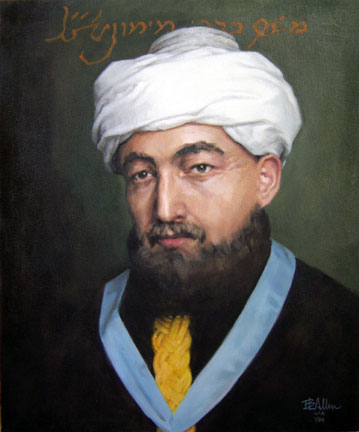
A significant Jewish philosopher is Maimonides. He was the normative voice in Judaism, whereas in Christianity it is Aquinas. Maimonides was a Talmudic expositor. His texts concerned questions about metaphysics and salvation. And he was a social commentator.
”By trying to bring Judaism and philosophy closer together, he did not leave either as he found it. If Judaism became more rigorous in defending its central beliefs, philosophy became more willing to face its limitations.”
Before Maimonides Judaism and philosophy were two very different things. Because of him philosophy began to recognise its limits which could be answered by religion, while Judaism became stricter and was more able to invoke logic. Both fields got transformed.
He was an excellent philosopher and easily adopted particular tones depending on which audience he was talking to. This with the purpose to bring over the message successfully. He left room to not interpret text literally, quite the opposite, he made his texts active to help the Jewish believers move beyond the superstitious. He tried to reconcile philosophy with religion. Philosophy was a kind of therapy, a therapy to the illness of the soul and it’s a cure to doubt.
Often it is said that God is powerful. However, two mistakes are made in this claim.
First, this claim is a predicate state of perfection. It’s problematic since the idea of power is understood in human terms, not in godly understanding power.
Second, it’s wrong to assume he possesses something called power. This implicates namely that there’s something that needs to give him power, while actually he doesn’t possess anything but his essence.
Understand God through silence. Trying to understand him through human language only puts you further away from God, because you limit him and end up with a God of your mind.
“God is silence. For God and of alone, silence is praise”
 Juliette's blog
Weer super goed 👍
LikeLike