Wees jezelf; de rest is al bezet.
— Oscar Wilde
Dit is het eerste bericht op mijn nieuwe blog. Deze blog is pas net opgericht, dus kom snel terug voor meer. Meld je hieronder aan om een bericht te ontvangen wanneer ik nieuwe berichten plaats.
Wees jezelf; de rest is al bezet.
— Oscar Wilde
Dit is het eerste bericht op mijn nieuwe blog. Deze blog is pas net opgericht, dus kom snel terug voor meer. Meld je hieronder aan om een bericht te ontvangen wanneer ik nieuwe berichten plaats.

There are several views on how Fideism is seen. Plantiga tries to describe it as something exclusively relying upon faith in order to find philosophical truth.
Yet, fideism is often seen as a field that opposes reason and therefore it couldn’t be the scope of philosophy. However, this popular anti-rationalism approach is not true.
The idea is that in the entire world causal relations are to be found everywhere and that God is the reason behind this. The science field tries to unpack causal relations and are not always such a similar view for putting God in the picture.
Keep in mind that, we have to get rid of the misunderstanding that Fideists reject reason, more importantly they challenge the evidence.
The rationalist would claim that for the proof of God’s existence that they use neutral premises. Fideists claims that these premises can’t be completely neutral. They wonder why we need evidence for something so basic, why we need epistemic value assigned to evidence which accompanies reason. This is something the Catholics also found interesting.
Normally, to overcome issues in an Aristotelian way we should go back to the origins of an idea. But when we try to reason with some religious situations we end up making the understanding of them worse. For example, when we try to make sense of the fact that Jesus woke up from his death, how do we justify that? We believe in it, it’s something to be believed. Mainly for the fact of its absurdity, that it seems so impossible it gives reasons to believe in it.
Only the thing is after the 1200s many theologians tried to reconcile religion with Aristotle’s logic. This didn’t work out so well and this led to scepticism because it didn’t give reasons to believe in God. But what has Christianity to do with Athens? There are different concerns and a different language, so it might not be so helpful to intertwine them since different justifications are being used. On top of that, theology has reasons to be suspicious of human faculties since they can be damaged by the corporal word, it would be like looking into a broken, dusty mirror which doesn’t lead to precise investigation on metaphysical questions.
Pascal concluded after introspection in a monastery that faith is a paradox which needs to be embraced. He was deeply convinced that the belief in God cannot be defended well. When we look at the nature of belief it’s exactly about something being incomprehensible, something that rules out the possibility to defend it rationally. When we believe in God, a powerful being, we notice he’s incomprehensible and infinite. The intensity of it goes beyond human beings.
And all the time we try to justify God with human language, so how can we blame believers like Christians for having their beliefs? When Christians prove the existence of God they will not keep being true to their word and faith, since He’s incomprehensible.
Especially because of their lack in proof, they show that they’re not lacking sense, because when you bring proof for mystical experience, you rendered it human.
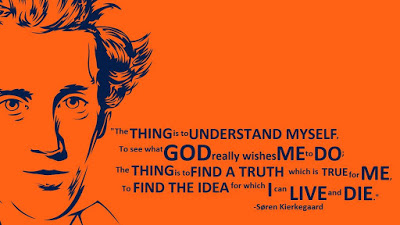
Proof is after the fact, it’s secondary. When you just had the world’s best brownie, your words can’t explain the experience to others. Experience is beyond the sensible. You can describe your experience, but it will never be enough for others to understand, except from when they eat that brownie themselves. Truth goes beyond words. Words can even do serious damage. In conclusion, we only arrive at approximation of truth, we don’t arrive at reality perfectly, would Kierkegaard say. Neither with religion, nor with science. Evidence destroys belief. For belief you need to be in a psychological state yourself.
With Fideism you place trust in an authority, the language of philosophy and the language if revelation shouldn’t mix.
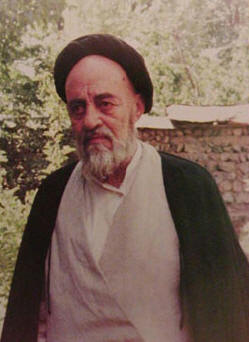
A lot of scientists are still sceptical about philosophy, because they don’t understand what is taught, because it’s not an exact science. And that while philosophy is so important, it helps you to understand religion and politics and helps you to come to terms with scientific theories like the big bang. Tabataba’i is a philosopher exegete and believes philosophy is essential for educated believers. Your faith can be a threat by scientific claims and Tabataba’i offers you a way out when facing these threatening challenges.
Tabataba’i attempted to revive philosophy. He was influenced by Ibn Arabi’s mystical dimension thoughts; he liked transcendental philosophy. His philosophy gives a critique on materialism and secularism and he gave a demonstration on doing metaphysics. He sets a vision that is hidden from materialists and which gives disclosure. In the world there are realities that aren’t visible, and they need to be grasped mentally and intellectually.
He gives us a homology approach; think in simultaneous modes through philosophy. You need a legal mystical theological outlook that doesn’t separate things but reinforce each other. He applies this method in his writings. He works in line with Henry Corbin.
Philosophy is universal, but sometimes it’s different coloured because it’s localised in different cultures.
Before you read scriptures, you need to be philosophically trained. Otherwise you unfairly claim authority for reading texts which can be very dangerous. Trained philosophers can see the value in universal scripture. Scripture is a communication between god and humans, it’s a bridge for rational agents for coming to know immaterial realities; the world of metaphysics.
Tabataba’I was like Avicenna sublime in summarising philosophical writings. He summarised text from Aristotle to Mulla Sadra Shirazi, which takes up a period for over 2000 years. And all that was summarised in a book of 150 pages.
Before understanding all the difficult works of philosophers, you have to undergo a philosophical awakening. Many reflective moments are ignored. He talks about the fact that it’s indubitable that we exist. Even doubt is a sign of existing. When you doubt you must acknowledge that you exist. Doubts triggers a moment in awakening which cannot be mediated by anything else. When you acknowledge reality is indubitable, you passed the first step.
Now, why do we take this step? Well, existence subsumes everything and is the highest category. Existence is predicated of its instances. When you talk about things you affirm that they are or that they are not. When they are not, they lack existence. When we talk about existence we don’t define it by a property, we reflect. The virtue of existence allows things to be what they are and gives things excellence. He applies a univocal predication; there’s one meaning of existence, there’s just one interpretation.
Tabataba’I talks about mental and real existence. For everything in the world, there’s human engagement. When we talk about a flower it has reality by itself, when we try to understand it, there’s a different modality; the essence is not maintained. The mind only finds its correspondence. In the mind there’s only the concept of the flower. The true essence is outside the mind.
Everything is an instantiation and particularisation of existence. Existence unfolds itself in different ways. There are just different degrees.
Existence has an ontological priority and is more fundamental than essence. Identified essences exist alongside existence. Essence cannot exist by itself.
Avicenna and Al-Farabi claimed that when we take person A, its existence comes first. Illuminists said properties are prior; essences come before existence. Tabataba’I denies that your essence doesn’t make you human, it’s existence that comes before essence.
Essence can’t bring itself into existence. Inside essence there must be something that exist before it which allows quiddity to come into reality and this must be an extrinsic being. What breaks down existence and non-existence is existing itself. And essences are responsible for bringing diversity into the world. We wouldn’t have a unity when essences would be prior. Existence is more universal and therefore fundamentally prior.
Tabataba’I also claims knowledge is an extension of ontology. It’s self-evident, when we learn more, we become more intense ontologically. When knowledge becomes a mode of existence, it becomes a way to participle in existence and increase human existence.
When we know something, we affirm or deny existence. In knowing an answer to a question, you affirm existence to it. So, knowledge is closely linked to existence.
In knowledge by presence we attach to immediacy. Nothing outside the human self is needed. For studying medicines you need external things, but for self-referential knowledge you don’t need things outside you. You have presence of it in the mind.
Given concepts themselves are metaphysical. We seem to know them immediately without material tools. Knowledge of immaterials is very well possible.
Arabic philosophy fits in the modern period and is still thriving. Some people think Arabic philosophy died with Al Ghazali’s attack on philosophers.
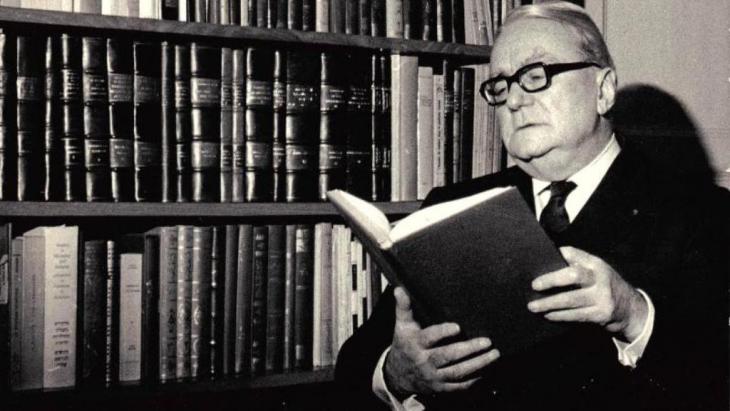
Henry Corbin claimed European studies impoverished. Many thinkers lack Arabic, they can’t read or access the texts. So, in the European world there wasn’t enough information about philosophers after Avicenna. This is tragic, since there has been a Persian Islamic renaissance. We keep talking about philosophers like Descartes while there were philosophers so much steps further ahead during the same time, like Mir Damad and Baha al-Din Amili. Corbin took part of the Isfahan school which contained a philosophical and mystical movement.
He used two approaches towards Arabic philosophy.
First, he invited the philosophy as wisdom about the human world and nature. He makes an important distinction with modern Arabic philosophy. He talks about rational and supra-rational. The philosophy is mystical as well as rational. Taste and emotion are used for mysticism. It’s a prophetic philosophy and a way of life, because within the journey you search for inner guiding principles of wisdom while reflecting on the world. So, for the inner search, philosophy is used.
Second, Corbin applies hermeneutics for reading texts. Meaning that by reading you seek to find different philosophical layers within the text; unveil the hidden. Often philosophical truths are hidden, when we can’t make sense of a text we’ve used the wrong techniques.
For example, a young child who doesn’t understand the function of bike yet, the idea of it was still concealed, now the child undergoes training and unveils the bike’s functioning.
An important aim of philosophy is to disclose the essence of texts. Language is needed when we have an essential truth, but at the same time language is a barrier between the subject and essential truth. Philosophy is an act of unveiling where language needs to be disclosed.
Dimitri Gutas is Corbin’s opponent. He thinks Corbin is obscuring Arabic philosophy and accuses him of reducing the Islam to a singular essence. Gutas thinks philosophy in the Islam isn’t mystical and rooted in spirituality. He warns us against reductionism. Gutas engages in nativism. Moreover, Gutas believes it’s false to assume as tension between mysticism and reason. This tension doesn’t always exist, at least not for Avicenna and Al-Farabi.
Corbin and Gutas have opposing views about how Arabic philosophy is seen, both have dominating views.
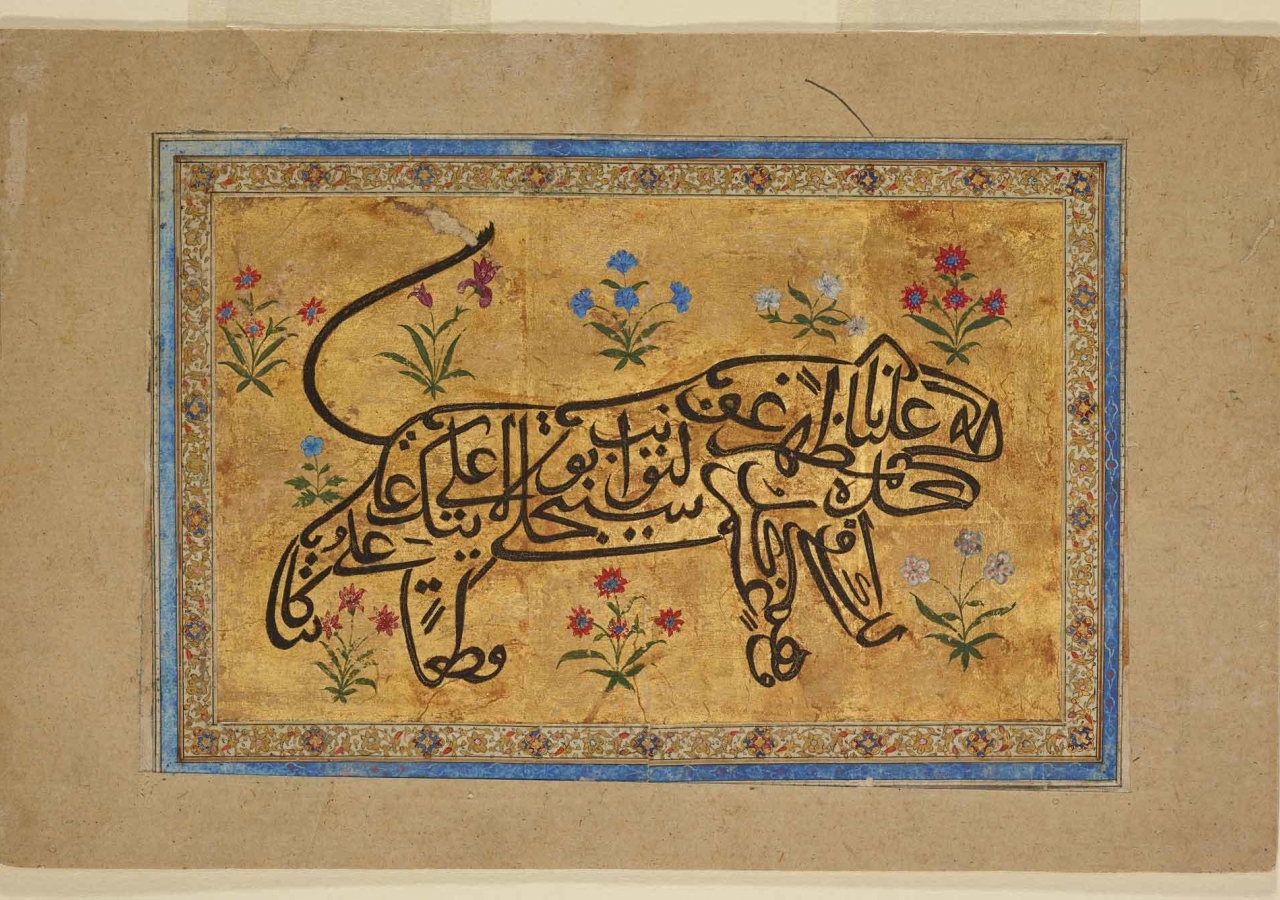
Ismailism is a branch in the Islam. They are a minority within the shia Muslims.
They are often misunderstood because lying is allowed in their field. But it certainly isn’t always allowed. The medievalist didn’t permit lying at all except for one circumstance; when your life is in a threatening situation and by lying you can escape this. So, immediate danger is the only exception.
Ismailists were Neoplatonists in the sense that you’re not supposed to reveal philosophical doctrines to individuals when you’re no expert in philosophy yet.
This early community was also interested in the nature of God and whether as human beings we can grasp his true nature, as we try to understand something infinite when we’re just finite. Also, we might ask if we can understand Him through human language. They discussed questions about the soul, where it is located and questions about the afterlife.
Ismailism beliefs in metapsychosis; the soul migrates from one human being into another, it transfers to the next sage. And this soul doesn’t die, it’s incorruptible. Therefore, every period of time, the imam the successor of Mohammed. He’s divine and infallible like the Pope.
They don’t believe in the existence of heaven and hell. The supposed punishment you get is the metaphysical soul, which will stop to intellect and would be worse than burning in hell.
We might wonder what the purpose of prophets is. Well, they outline outward meaning truths, they are useful but not that deep. We’re talking about religions here, it’s exoteric.
Then, we also have esoteric inner teachings contained in religion. This isn’t told by prophets but by the Imam.
Ismailism thinks that for some souls abstract rigorous training of philosophy is a too difficult practice. They use animals as symbolism, because rational argument doesn’t always work with the masses. The animals teach us how to learn moral codes and insist pursuing a rational mode of thinking about the world. Human beings have oppressed animals and acted arrogantly. Animals makes us think about what is outside the self and reminds us of our ill way of living. We’re invited to think in a universal intellectual way.
The key message is that metaphysical truths are greater than the human body. Think about the ontology of otherness. Animals take the podium away for the human beings, there’s a Copernican turn occurring. We’re not the centre of the cosmos, animals are no subjects. The only way to do philosophy properly is to understand and reflect in a much larger ontology.
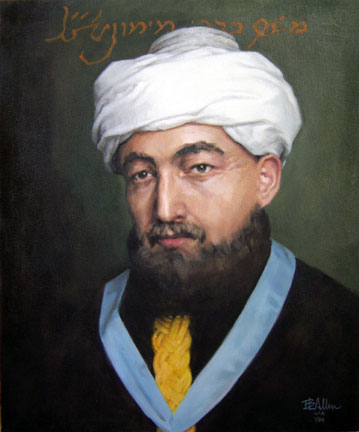
Jewish philosophy is related to Arabic philosophy. It’s not an unknown fact that the Arabic world is predominated by Muslims. But the Jews were certainly a part of the Middle East as well. The Jews were also big contributors. The Jewish tradition was very dynamic. Some Jews introduced Latin in the Arabic world. Judaism is broader than religion. It’s concerned with philosophical questions. Like the human nature and human conduct. This is understandable since every religious foundational text is followed by philosophy. Text namely requires interpretations and people who comment on the text so that it can be useful in the society. So, philosophy was a really important factor for the rise of the religious traditions.
Philosophy goes hand in hand with theology. It was a mean to understand Jewish beliefs and practices. Questions needed to be answered like why God sends messiahs and what the afterlife is, how something can be transcendental when limited and if messages are eternally true.
Moreover, human conduct concerns could be answered through philosophy despite the religion.
Independent reasons of community were important too. People tried to understand what the cosmos contains and what the world we live in entails.
There’s a typology of Jewish philosophers.
A significant Jewish philosopher is Maimonides. He was the normative voice in Judaism, whereas in Christianity it is Aquinas. Maimonides was a Talmudic expositor. His texts concerned questions about metaphysics and salvation. And he was a social commentator.
”By trying to bring Judaism and philosophy closer together, he did not leave either as he found it. If Judaism became more rigorous in defending its central beliefs, philosophy became more willing to face its limitations.”
Before Maimonides Judaism and philosophy were two very different things. Because of him philosophy began to recognise its limits which could be answered by religion, while Judaism became stricter and was more able to invoke logic. Both fields got transformed.
He was an excellent philosopher and easily adopted particular tones depending on which audience he was talking to. This with the purpose to bring over the message successfully. He left room to not interpret text literally, quite the opposite, he made his texts active to help the Jewish believers move beyond the superstitious. He tried to reconcile philosophy with religion. Philosophy was a kind of therapy, a therapy to the illness of the soul and it’s a cure to doubt.
Often it is said that God is powerful. However, two mistakes are made in this claim.
First, this claim is a predicate state of perfection. It’s problematic since the idea of power is understood in human terms, not in godly understanding power.
Second, it’s wrong to assume he possesses something called power. This implicates namely that there’s something that needs to give him power, while actually he doesn’t possess anything but his essence.
Understand God through silence. Trying to understand him through human language only puts you further away from God, because you limit him and end up with a God of your mind.
“God is silence. For God and of alone, silence is praise”

According to Aristotle, metaphysics is utterly important. It’s the first philosophy that is concerned with ‘the first causes and principles of things.’ The field needs to explain things that are beyond the physical world. Theology is a field that is concerned with metaphysical questions and puts God in the centre.
Al-Ghazali is notorious for being an anti-Aristotelian, in other words for being irrational. Moreover, he’s being accused of ending the golden age of the Islam. To which extent is this true? Is it true at all? He might have been portrayed like this bad guy however the situation is quite the opposite. He wrote a book to summarise philosophers, stepped into their train of thoughts, to have an objective position as possible, subsequently he noticed incoherences in their work. He was a critical thinker, who puts theories into question and demanded answers. He encouraged to study philosophy in order to refute it. In a way, he’s not so much different from Socrates, who kept raising questions in order to come closer to the truth. So, the opposite of his accusations is the truth, he’s being very rational and more importantly, the golden age started after he set foot.
What goes wrong most often with the systematisation of philosophers? Well, many philosophers just imitate their ancestors without proper investigation. Also, questions are asked that shouldn’t be asked in philosophy in the first place. Questions about metaphysics which you can’t answer through empirical proof. A lot of questions about God, his existence and causality are ‘proven’ while there are so many errors in these proofs. Claims were being made when there’s no necessary consequence from premise to conclusion. That leads to bad philosophy. Al-Ghazali wants to uphold the scientific method and metaphysics can’t be part of that because of the inability to demonstrate.
Metaphysics is outside the realm of science. In philosophy there’s no room for imagination, because there’s no fundamental agreement. According to Al-Ghazali, philosophy has nothing to offer in understanding religion. Philosophy needs logic. Also, theology has the task for investigating metaphysical questions. In religion there’s a long tradition of broad agreement in faith. And religion has reliable sources like prophets who claim to have received revelation. Philosophy doesn’t have this authority. Philosophy should stay away from metaphysics, because philosophy is about logic and good demonstration. He thinks good philosophy only entails scientific questions.
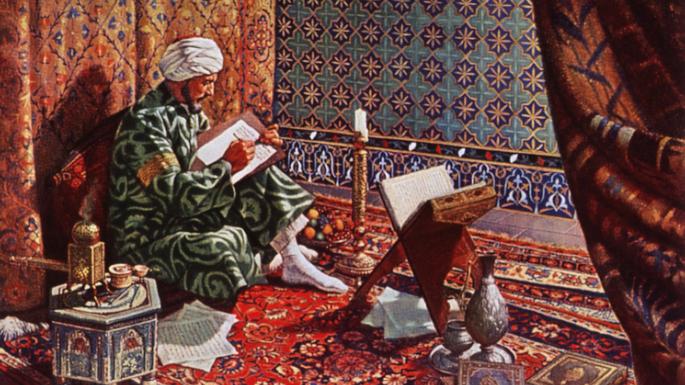
Avicenna introduced a new chapter in philosophy. He didn’t continue the path of Aristotelean philosophy. He became a dominant figure. He diverges in Islamic thought. What’s impressive is that he gives a combination of 2000 years of philosophical activity, explained and clarified. By systemising, ingredients are used to form a new tradition. This led to a coherent worldview where many people believed in.
Aristotle sees the soul as a first perfection of a natural body, it’s a completion. He believed that every matter needs a form to exist. All objects in the world contain matter and form. He divides the soul into three parts. Firstly, the vegetative part which is about self-nutrition, growth and reproduction. Secondly, the animal part; the addition of perception and voluntary motion. Thirdly, the human; the addition of rational cognition and action. According to Aristotle, the soul has always been one, just the propensity has changed.
Avicenna critiques Aristotle his theory. There’s a discrepancy, does the soul only operates when it’s in the body? The soul only seems to operate when it’s in the body. That would explain that the soul cares about the bodily functions. This seems to deny dualism. The second problem is the question if human intellectual capacity necessarily entails immateriality. If thinking would be separate from the body, then what is the role of the body in human thinking? The third problem is the location of the soul. Why is in a specific body and not in the other and where in the body does it function? The idea of the soul lead to monopsychism; that all aggregates are of one singular soul. Like there’s a super computer that access to all in the world.
Gladly, Avicenna comes up with solution. What counts for your persuasion and mental states are not the body, because we all have a body with some functions. So, there must be something extra bodily which isn’t necessarily attached to the body. It’s not necessary that the body animates itself. The body commands to live. Wilful decisions can’t generate themselves. Just like a bowl that can’t let it self-roll. Only an action that carries a will must be because of immaterial substance. The living human being can’t live without body and soul. But then if the human essence isn’t the soul, why does it need a body in the first place?
There’s a co-dependent relationship between the soul and body. The body needs the soul to tame it and to instruct to keep the body healthy. The soul needs to grow. The soul is like a hard drive that needs a computer to program it. It acquires intelligible through learning. Therefore, the soul needs the body, the soul isn’t the body.
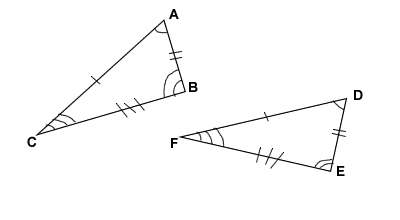
What makes you, you? There’s a multiplicity of souls. To account for exclusiveness, you need spatial temporality. The soul is in a certain space; the body. Take for example two identical triangles, the space and temporality make them different. The multiple souls have all different experiences. They started the same, compare for example water in different bottles. It’s through learning that you become more intense as a human being. All in all, the soul requires the body to become an individual.
According to Avicenna, the soul has 5 internal senses. 1: The common sense; the reception of forms. It explains how you come to know things, you receive forms as data and you remember. 2: The imagery imprinted in the soul. Like the form water remains. It’s about the retention of forms. 3: The estimation; the reception of meanings; how you assign meaning to a form (e.g. The bottle). 4: memory; the retention of meaning. 5: imagination; the separation and combination of forms and meanings.
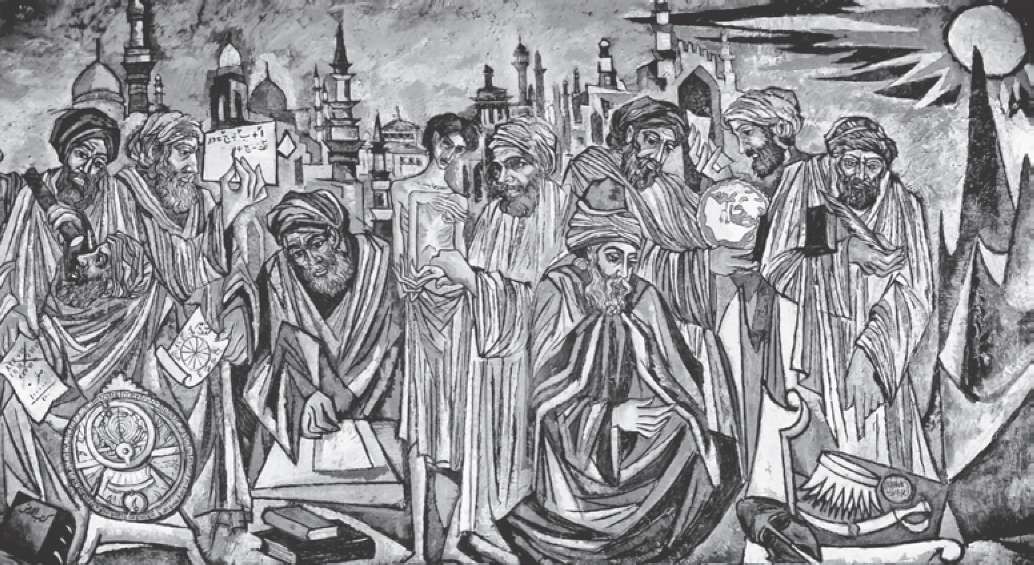
Arabic philosophy is not identical to Islamic philosophy. Arabic philosophy can be religious, so it can be about the Islam, but it can also be about Judaism or Christianity.
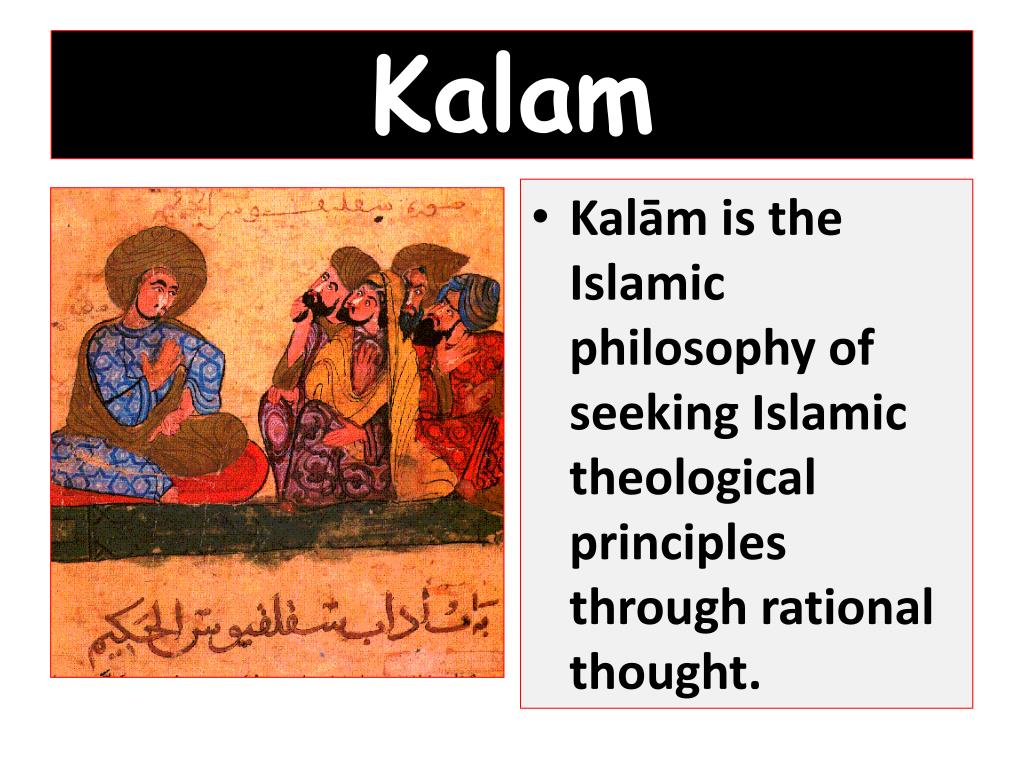
Kalam (=Intelligent speech) started as an intra Muslim disputation. Early religious concerns in the 700s and 800s ad were addressed. Topics about free will, God’s nature, divine attributes and the role of reason were quite popular. An intellectual tradition has arisen and were find in Syrian, Greek, Middle Persian, Armenian and Arabic. People were namely trying to assert their identities. Religious communities of late antiquity in the Middle-East were active in inter-religious debates, they were influenced by Hellenistic philosophy. Also, they had a scientific legacy of Greeks and Persians, which really helped to think more rationally.
There are 2 distinct meanings for Kalam in early Islam. Firstly, the theological argumentation. By asking the opponents questions and reducing the opponent’s position to meaningless alternatives. This involves the disjunctive argumentation method.
Secondly, the systematic theological argumentation that seeks to defend explicate and rationalize Muslim beliefs and religious commitments.
Innovative ideas were brought by kalam. Physics were discussed, atomism, but most importantly our role as human being. Do we have power over our acts (quadar), are our actions already predetermined and if so, can we still choose freely? And can God still punish us if we don’t have influence on our actions? Also, we see God as all-powerful , but if we create our actions it seems like a problem arises. That also brings the question along about responsibility.
Muʿtazili school of Kalam was founded in Iraq in the 700s ad. It was a movement between 2 extremes. Al-Nazzam was an early thinker in this school. He thought about the effects of atomism, because atoms were divided at infinitum. What does this mean for human beings when the entire universe is made up of basic elements? Well, atoms occupy spatiality. This shows us we can make a correct claim about the world without needing the theologian. The separation of atoms explains why we can have different bodies and multiplicities when the original configuration remains untouched. For the configuration to happen we need the law of causality.
Causality is the reason for change in the world. There are three positions on causality of accidents (Aristotle). The first one is that they are caused by God. Second, that they proceed from their substrate. Lastly, the causal efficacy of human agents. It’s clear that the atoms need something forceful for their movements.
There are questions about God and the attributes. Like how can you defend he’s one and still has multiple attributes? There are 2 ways to see this. Either the attributes are additional to essence or separated from essence. Both are problematic for monotheism. Mu’tazila refuses that the attributes are distinct. God is a simple entity, one absolute reality. He’s at once merciful and loving. The human perspective is important for how we see him. God is a simple entity, like water is a simple entity, water can look blue, but also pink, it’s dependent on the background, in the way you see it. God knows in a universal. He doesn’t know in particular. Like with Muslims and Christians there are detailed differences. That matters for theology. When we’re looking in a philosophical perspective it doesn’t really matter.
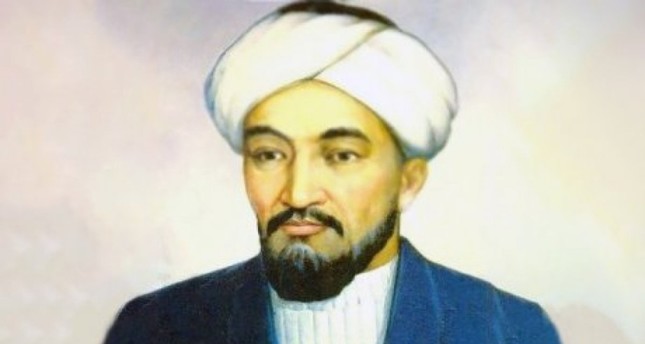
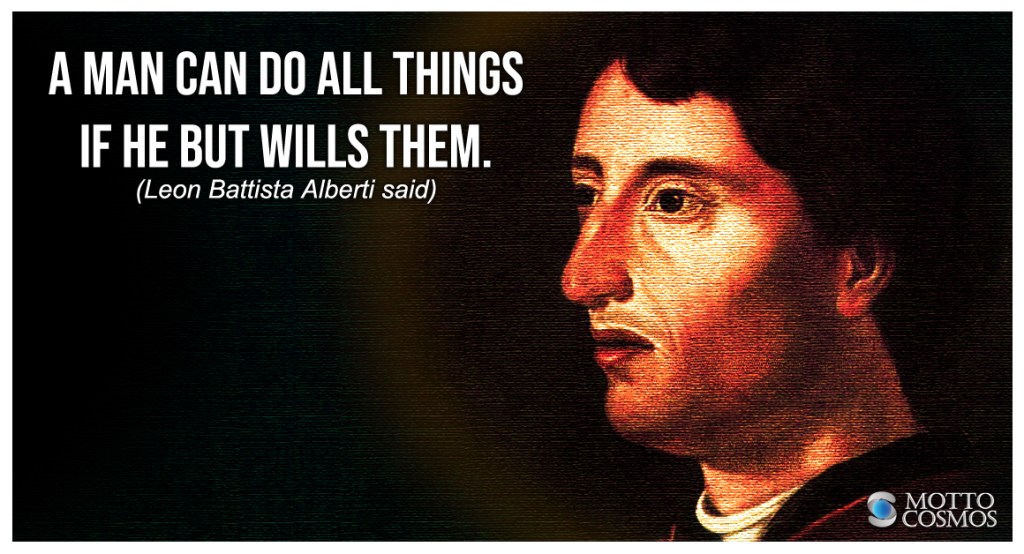
Aristotle was seen as the first master. He lived from 384-322 BC. It took quite some time before the next big philosopher was discovered. Al-Farabi (872-950) was seen as the next big hit. Still, the third master hasn’t been discovered yet. Al-Farabi wasn’t just a philosopher, he was also a scientist, musician, logician, cosmologist and mathematician. In Europe during the Renaissance period the idea of becoming an expert in several fields was very beloved. The idea of the polymath was well expressed by Leon Battista Alberti. He stated that ‘a man can do all things if he will’. Leonardo Da Vinci is a good example of a polymath during the Renaissance.
The big question that arises, is the question why there are hardly masters any more who take part in several fields. Possible reasons could be that there’s more specialisation nowadays, we live in a capitalistic world, we need a proper time management and if we want to know things we have accessible sources as Google which will ‘help’ us. Moreover, universities are focussed on entities to fill the labour market.
Now that there’s more attention to specific fields, you’re able to specialise. That already takes a lot of time. When you’re an expert you know everything about a certain subject. When boundaries between fields disappear then there would be a bigger amount of training to cover everything. The quality of specialisation will decrease. So, if we calculate what will bring us the most knowledge it seems like the experts of several fields have to collaborate, because they all have the best quality and together the biggest quantity. However, keep in mind that certain fields are partly required for the other field. When you study philosophy for example you have to think space and time related, so history is still an important perspective, but that doesn’t mean you have to be expert in history. Just have some knowledge about other fields to see the big web and put things in perspective.
Another major difference between the past and now concerning knowledge, is that today we speak about values while in the past we use to talk about virtues.
Also, big influencers from the past started covering major fields at an earlier age. Al-Farabi for example was only 10 years old when he started to practise philosophy. He has the following guide to become expert in many fields as philosopher. Firstly, you should start studying linguistic sciences, grammatical laws are namely supposed to be rational principles. Secondly, you should study logic, it basically sets you straight and will protect you from making errors in thinking. It’s to demonstrate your logic proof. Thirdly, mathematics is required, it will cover topics like geometry, music, mechanics, optics and astronomy. Fourthly, studying physics; it’s the study of the bodies and their movements. The fifth program consists metaphysics which puts on emphasis on ontology, the first principles and immaterial beings. Then there’s the sixth program which is about ethics. It’s about outward looking, how you ought to behave around other people. Ethics will try to help you find happiness, which will follow from virtuous acts and good politics that ensure your dignity. The seventh program is optional, you can choose it to become a Muslim, then you will study theology in accordance to law. These steps will most certainly help to increase your knowledge.
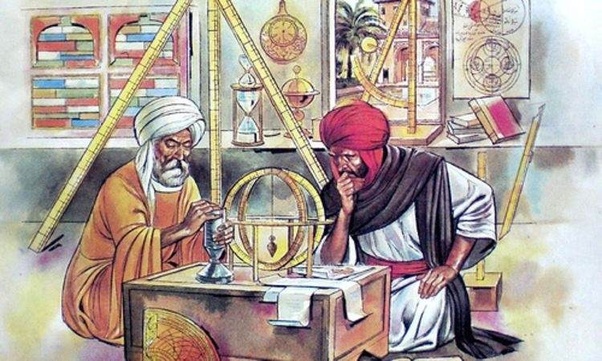
Study of Arabic/Islamic/Middle-East philosophy?
When you look at the history of the Arabic world, you notice history and philosophy are strongly intertwined. Empires preferred monistic religions. An emperor was seen as the mediator to God, which is beneficial for the emperor, so he could be better obeyed. The idea was picked up from the Greek, Roman empire where it was all about power and prestige. To be more sophisticated was the goal, and to obtain this many Ancient writings from many areas over the world were to be translated.
Nowadays we have two worldviews interfacing together.
Transfer of wisdom used to be only one way, from the Greeks to the Arabic World.
When we speak about Arabic philosophy some people tend to think that it is the same as Islamic theory. Dimitri Gutas certainly doesn’t share this view. Greek wisdom shifted to the Eastern World. As a result, the Arabic philosophy is just a continuous wisdom of the Greeks in Arabic writings which kept developing in Arabic traditions. Islamic philosophy would be misleading, because there’s nothing religious about Arabic philosophy.
On the other side you have Hossein Nasr. He believes there’s no such thing as Arabic philosophy. He claims that all major figures were Muslims and that is no coincidence.
Both of their theories are quite extreme. However, there’s merit to both of them. The right answer must be somewhere in-between. Moreover, the terminology shouldn’t be the main focus.
What is important, is that philosophy transformed medieval society. The city Baghdad used to have a huge impact. It was seen as the centre of the world, with connections from Iraq to Persia. The plan was to maintain ancient Greek philosophy. The Academy of Athens had moved to Iran. A translation movement arose to monopolise knowledge. Fields like philosophy, astronomy, maths and music were being shared. More importantly, philosophy included every aspect of life. Motivations for this translation movement were to bring religious unity, imperial ideology and glory. Also, to master the civilisation that could protect philosophy. Mainly for the reason that philosophy is a remedy for societies that are torn apart. Philosophy helps you to make persuasive arguments and cares about how the human soul functions which most religions care for, which can unite all of them. To maintain knowledge, debates were held, and encyclopaedias were made. All in all, philosophy was being used as a medium and remedy to address contemporary issues, to be brave and to engage with one another.

 Juliette's blog