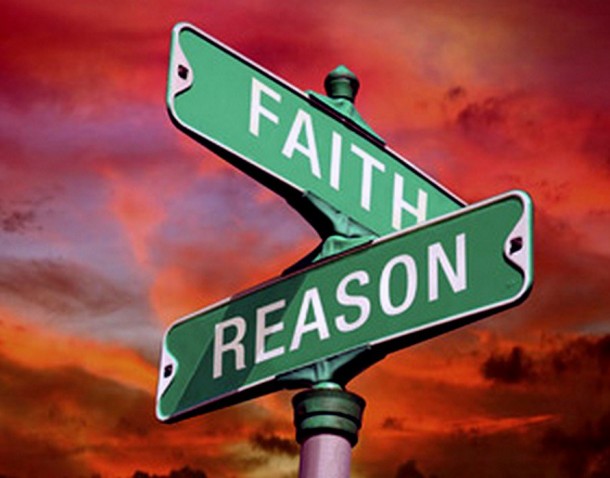
There are several views on how Fideism is seen. Plantiga tries to describe it as something exclusively relying upon faith in order to find philosophical truth.
Yet, fideism is often seen as a field that opposes reason and therefore it couldn’t be the scope of philosophy. However, this popular anti-rationalism approach is not true.
The idea is that in the entire world causal relations are to be found everywhere and that God is the reason behind this. The science field tries to unpack causal relations and are not always such a similar view for putting God in the picture.
Keep in mind that, we have to get rid of the misunderstanding that Fideists reject reason, more importantly they challenge the evidence.
The rationalist would claim that for the proof of God’s existence that they use neutral premises. Fideists claims that these premises can’t be completely neutral. They wonder why we need evidence for something so basic, why we need epistemic value assigned to evidence which accompanies reason. This is something the Catholics also found interesting.
Normally, to overcome issues in an Aristotelian way we should go back to the origins of an idea. But when we try to reason with some religious situations we end up making the understanding of them worse. For example, when we try to make sense of the fact that Jesus woke up from his death, how do we justify that? We believe in it, it’s something to be believed. Mainly for the fact of its absurdity, that it seems so impossible it gives reasons to believe in it.
Only the thing is after the 1200s many theologians tried to reconcile religion with Aristotle’s logic. This didn’t work out so well and this led to scepticism because it didn’t give reasons to believe in God. But what has Christianity to do with Athens? There are different concerns and a different language, so it might not be so helpful to intertwine them since different justifications are being used. On top of that, theology has reasons to be suspicious of human faculties since they can be damaged by the corporal word, it would be like looking into a broken, dusty mirror which doesn’t lead to precise investigation on metaphysical questions.
Pascal concluded after introspection in a monastery that faith is a paradox which needs to be embraced. He was deeply convinced that the belief in God cannot be defended well. When we look at the nature of belief it’s exactly about something being incomprehensible, something that rules out the possibility to defend it rationally. When we believe in God, a powerful being, we notice he’s incomprehensible and infinite. The intensity of it goes beyond human beings.
And all the time we try to justify God with human language, so how can we blame believers like Christians for having their beliefs? When Christians prove the existence of God they will not keep being true to their word and faith, since He’s incomprehensible.
Especially because of their lack in proof, they show that they’re not lacking sense, because when you bring proof for mystical experience, you rendered it human.
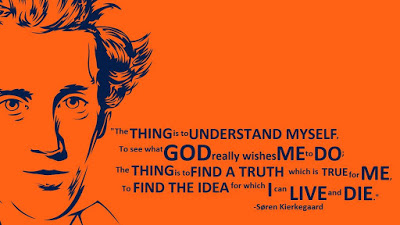
Proof is after the fact, it’s secondary. When you just had the world’s best brownie, your words can’t explain the experience to others. Experience is beyond the sensible. You can describe your experience, but it will never be enough for others to understand, except from when they eat that brownie themselves. Truth goes beyond words. Words can even do serious damage. In conclusion, we only arrive at approximation of truth, we don’t arrive at reality perfectly, would Kierkegaard say. Neither with religion, nor with science. Evidence destroys belief. For belief you need to be in a psychological state yourself.
With Fideism you place trust in an authority, the language of philosophy and the language if revelation shouldn’t mix.
 Juliette's blog