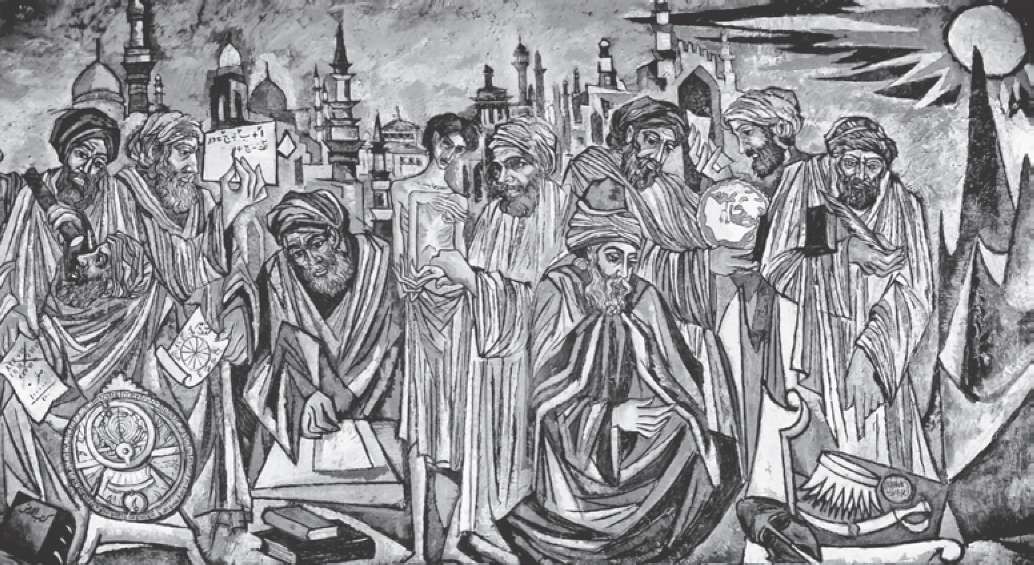
Arabic philosophy is not identical to Islamic philosophy. Arabic philosophy can be religious, so it can be about the Islam, but it can also be about Judaism or Christianity.
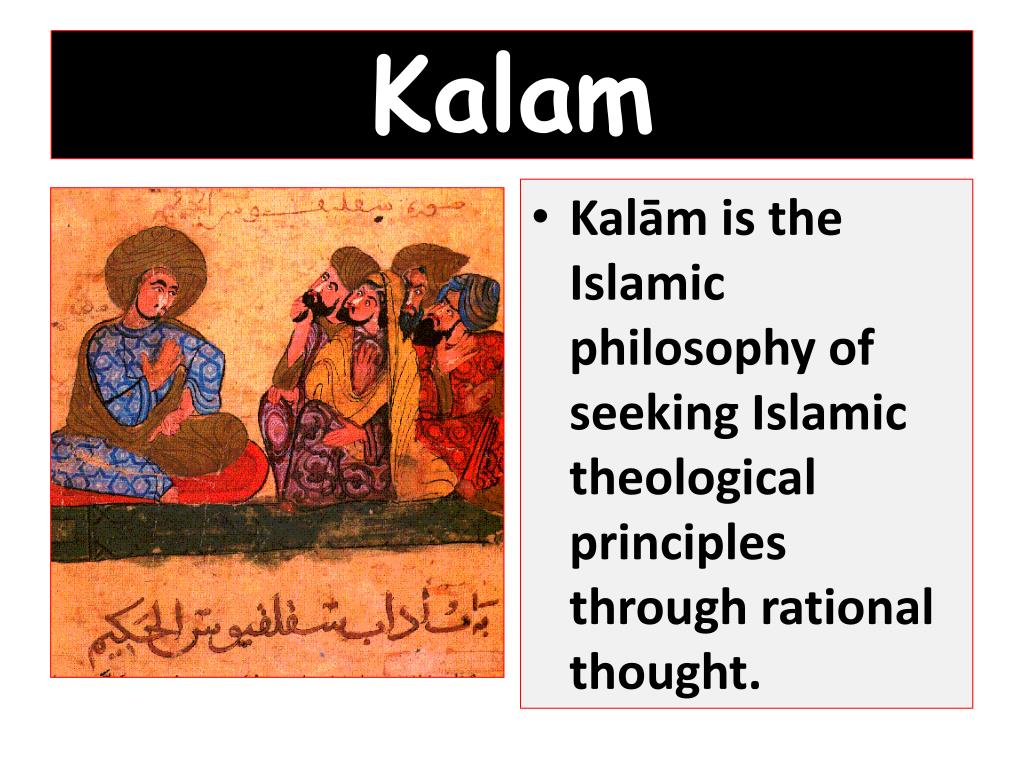
Kalam (=Intelligent speech) started as an intra Muslim disputation. Early religious concerns in the 700s and 800s ad were addressed. Topics about free will, God’s nature, divine attributes and the role of reason were quite popular. An intellectual tradition has arisen and were find in Syrian, Greek, Middle Persian, Armenian and Arabic. People were namely trying to assert their identities. Religious communities of late antiquity in the Middle-East were active in inter-religious debates, they were influenced by Hellenistic philosophy. Also, they had a scientific legacy of Greeks and Persians, which really helped to think more rationally.
There are 2 distinct meanings for Kalam in early Islam. Firstly, the theological argumentation. By asking the opponents questions and reducing the opponent’s position to meaningless alternatives. This involves the disjunctive argumentation method.
Secondly, the systematic theological argumentation that seeks to defend explicate and rationalize Muslim beliefs and religious commitments.
Innovative ideas were brought by kalam. Physics were discussed, atomism, but most importantly our role as human being. Do we have power over our acts (quadar), are our actions already predetermined and if so, can we still choose freely? And can God still punish us if we don’t have influence on our actions? Also, we see God as all-powerful , but if we create our actions it seems like a problem arises. That also brings the question along about responsibility.
Muʿtazili school of Kalam was founded in Iraq in the 700s ad. It was a movement between 2 extremes. Al-Nazzam was an early thinker in this school. He thought about the effects of atomism, because atoms were divided at infinitum. What does this mean for human beings when the entire universe is made up of basic elements? Well, atoms occupy spatiality. This shows us we can make a correct claim about the world without needing the theologian. The separation of atoms explains why we can have different bodies and multiplicities when the original configuration remains untouched. For the configuration to happen we need the law of causality.
Causality is the reason for change in the world. There are three positions on causality of accidents (Aristotle). The first one is that they are caused by God. Second, that they proceed from their substrate. Lastly, the causal efficacy of human agents. It’s clear that the atoms need something forceful for their movements.
There are questions about God and the attributes. Like how can you defend he’s one and still has multiple attributes? There are 2 ways to see this. Either the attributes are additional to essence or separated from essence. Both are problematic for monotheism. Mu’tazila refuses that the attributes are distinct. God is a simple entity, one absolute reality. He’s at once merciful and loving. The human perspective is important for how we see him. God is a simple entity, like water is a simple entity, water can look blue, but also pink, it’s dependent on the background, in the way you see it. God knows in a universal. He doesn’t know in particular. Like with Muslims and Christians there are detailed differences. That matters for theology. When we’re looking in a philosophical perspective it doesn’t really matter.
 Juliette's blog