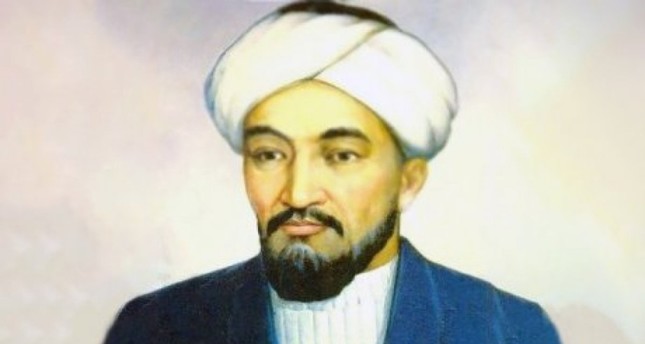
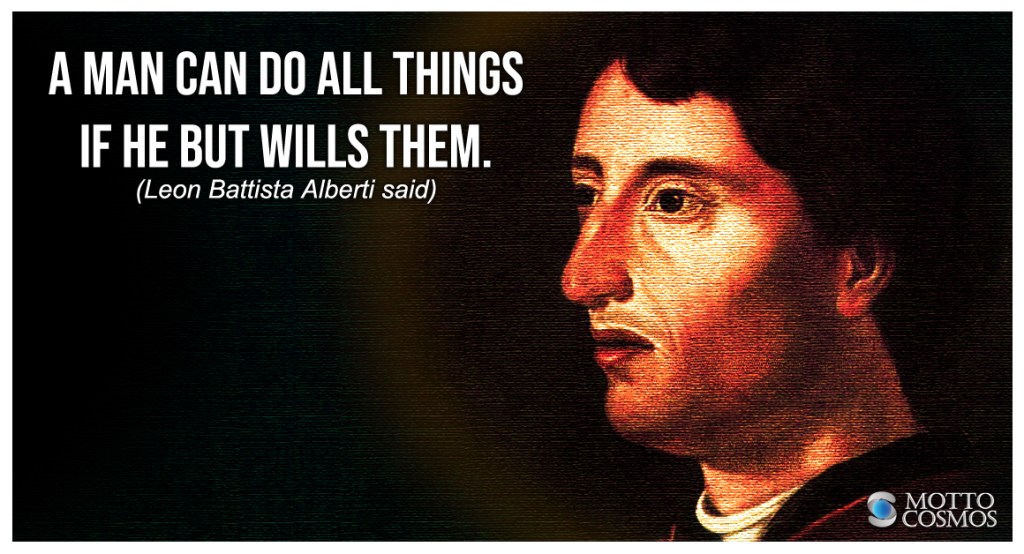
Aristotle was seen as the first master. He lived from 384-322 BC. It took quite some time before the next big philosopher was discovered. Al-Farabi (872-950) was seen as the next big hit. Still, the third master hasn’t been discovered yet. Al-Farabi wasn’t just a philosopher, he was also a scientist, musician, logician, cosmologist and mathematician. In Europe during the Renaissance period the idea of becoming an expert in several fields was very beloved. The idea of the polymath was well expressed by Leon Battista Alberti. He stated that ‘a man can do all things if he will’. Leonardo Da Vinci is a good example of a polymath during the Renaissance.
The big question that arises, is the question why there are hardly masters any more who take part in several fields. Possible reasons could be that there’s more specialisation nowadays, we live in a capitalistic world, we need a proper time management and if we want to know things we have accessible sources as Google which will ‘help’ us. Moreover, universities are focussed on entities to fill the labour market.
Now that there’s more attention to specific fields, you’re able to specialise. That already takes a lot of time. When you’re an expert you know everything about a certain subject. When boundaries between fields disappear then there would be a bigger amount of training to cover everything. The quality of specialisation will decrease. So, if we calculate what will bring us the most knowledge it seems like the experts of several fields have to collaborate, because they all have the best quality and together the biggest quantity. However, keep in mind that certain fields are partly required for the other field. When you study philosophy for example you have to think space and time related, so history is still an important perspective, but that doesn’t mean you have to be expert in history. Just have some knowledge about other fields to see the big web and put things in perspective.
Another major difference between the past and now concerning knowledge, is that today we speak about values while in the past we use to talk about virtues.
Also, big influencers from the past started covering major fields at an earlier age. Al-Farabi for example was only 10 years old when he started to practise philosophy. He has the following guide to become expert in many fields as philosopher. Firstly, you should start studying linguistic sciences, grammatical laws are namely supposed to be rational principles. Secondly, you should study logic, it basically sets you straight and will protect you from making errors in thinking. It’s to demonstrate your logic proof. Thirdly, mathematics is required, it will cover topics like geometry, music, mechanics, optics and astronomy. Fourthly, studying physics; it’s the study of the bodies and their movements. The fifth program consists metaphysics which puts on emphasis on ontology, the first principles and immaterial beings. Then there’s the sixth program which is about ethics. It’s about outward looking, how you ought to behave around other people. Ethics will try to help you find happiness, which will follow from virtuous acts and good politics that ensure your dignity. The seventh program is optional, you can choose it to become a Muslim, then you will study theology in accordance to law. These steps will most certainly help to increase your knowledge.
 Juliette's blog