Study of Arabic/Islamic/Middle-East philosophy?
When you look at the history of the Arabic world, you notice history and philosophy are strongly intertwined. Empires preferred monistic religions. An emperor was seen as the mediator to God, which is beneficial for the emperor, so he could be better obeyed. The idea was picked up from the Greek, Roman empire where it was all about power and prestige. To be more sophisticated was the goal, and to obtain this many Ancient writings from many areas over the world were to be translated.
Nowadays we have two worldviews interfacing together.
Transfer of wisdom used to be only one way, from the Greeks to the Arabic World.
When we speak about Arabic philosophy some people tend to think that it is the same as Islamic theory. Dimitri Gutas certainly doesn’t share this view. Greek wisdom shifted to the Eastern World. As a result, the Arabic philosophy is just a continuous wisdom of the Greeks in Arabic writings which kept developing in Arabic traditions. Islamic philosophy would be misleading, because there’s nothing religious about Arabic philosophy.
On the other side you have Hossein Nasr. He believes there’s no such thing as Arabic philosophy. He claims that all major figures were Muslims and that is no coincidence.
Both of their theories are quite extreme. However, there’s merit to both of them. The right answer must be somewhere in-between. Moreover, the terminology shouldn’t be the main focus.
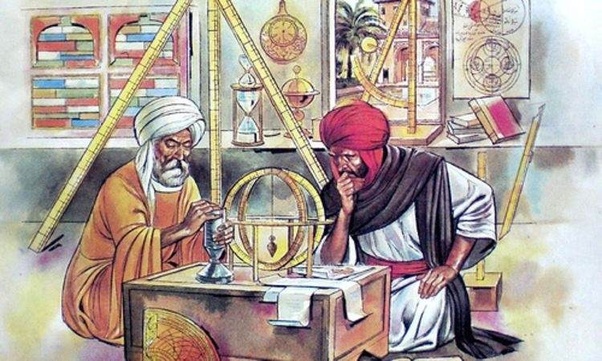
What is important, is that philosophy transformed medieval society. The city Baghdad used to have a huge impact. It was seen as the centre of the world, with connections from Iraq to Persia. The plan was to maintain ancient Greek philosophy. The Academy of Athens had moved to Iran. A translation movement arose to monopolise knowledge. Fields like philosophy, astronomy, maths and music were being shared. More importantly, philosophy included every aspect of life. Motivations for this translation movement were to bring religious unity, imperial ideology and glory. Also, to master the civilisation that could protect philosophy. Mainly for the reason that philosophy is a remedy for societies that are torn apart. Philosophy helps you to make persuasive arguments and cares about how the human soul functions which most religions care for, which can unite all of them. To maintain knowledge, debates were held, and encyclopaedias were made. All in all, philosophy was being used as a medium and remedy to address contemporary issues, to be brave and to engage with one another.
 Juliette's blog